
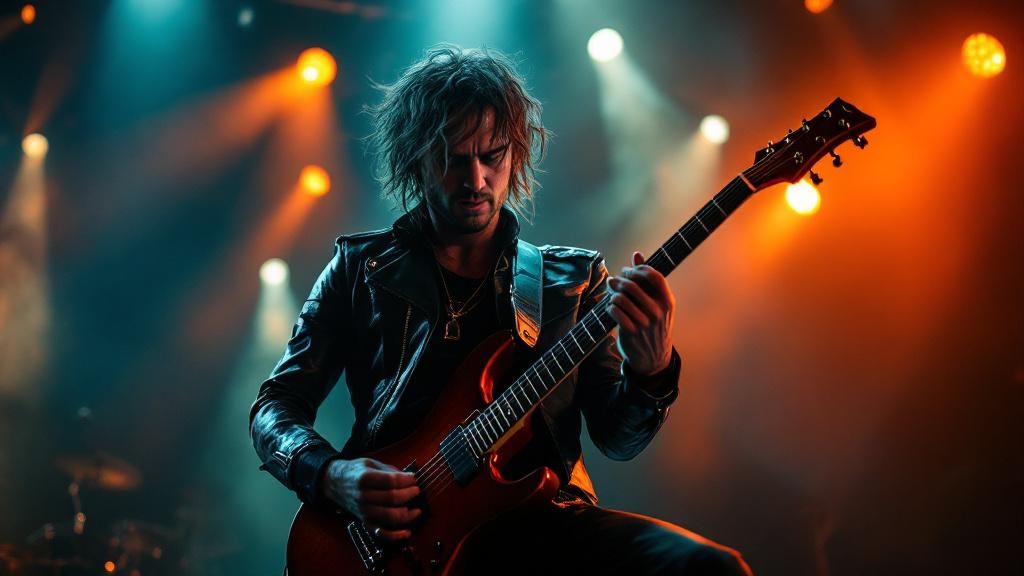
Leon Thomas has completed his remarkable journey from Broadway child star to Grammy-winning R&B virtuoso. The 32-year-old New York native, who spent years as a highly productive producer for Drake, Ariana Grande and Post Malone, has established himself as one of the music industry’s most thrilling breakthrough artists in the wake of his 2024 album Mutt. Last month, Thomas secured two Grammy Awards from six nominations, encompassing best R&B album and best traditional R&B performance, solidifying his transition from behind-the-scenes collaborator to chart-dominating solo performer. His rapid ascent has caught the attention of music royalty: Stevie Wonder personally requested his participation in a Rock and Roll Hall of Fame tribute, whilst George Clinton gave him custom headgear at Coachella. At 32, Thomas is connecting different eras and redefining contemporary R&B with a Prince-like fearlessness.
The Remarkable Journey from Nickelodeon to Grammy Success
Leon Thomas’s journey towards R&B stardom started in the most unexpected places: the dazzling realm of Broadway and the sets of Nickelodeon productions. Before commanding full houses and partnering with Stevie Wonder, Thomas was a young performer, developing his talent in the entertainment world’s most high-profile spaces. Yet contrary to becoming typecast as a ex-child performer, he intentionally moved towards producing music, operating behind the scenes with some of the sector’s leading figures. This training period became invaluable, enabling him to develop a sophisticated understanding of contemporary R&B whilst remaining largely out of the spotlight.
The transition from producer to frontman might have appeared risky, but Thomas’s 2024 album Mutt revealed an artist fully realised and prepared for the world stage. The project’s opening track, “Mutt”—a cheeky, funk-inflected tribute that earned him the fond title “the dog song kid”—became his breakthrough moment. What makes Thomas’s emergence distinctly impressive is his refusal to chase trends or compromise his artistic vision for commercial success. Instead, he’s taken cues from funk pioneers like George Clinton and soul visionaries like D’Angelo, building a sound that feels both timeless and urgently contemporary. His Grammy honour affirms not just commercial success, but true artistic integrity.
- Nickelodeon and Broadway child performer prior to music career
- Spent years as a producer for Drake, Ariana Grande and Post Malone
- Debut album Mutt dropped in 2024 to critical acclaim
- Won two Grammys from 6 nominations in February 2025
Merging Rock and Soul: A Musical Philosophy
Leon Thomas’s creative approach represents a intentional blending of rock’s unpolished power with soul’s emotional depth—a combination that feels increasingly rare in contemporary R&B. Rather than compartmentalising these genres, Thomas treats them as complementary forces, drawing equally from the cosmic funk of George Clinton and the introspective soul of D’Angelo. His willingness to blur boundaries reflects a maturity that transcends generational divides. By working alongside legends like Stevie Wonder and Mariah Carey, Thomas has positioned himself not as a mere trend-chaser but as a serious musician participating in substantive creative conversation with the icons who shaped modern music.
What makes distinctive Thomas’s approach is his resistance to contemporary R&B’s market expectations. His music honours both the sacred and the profane with Prince-like fearlessness, establishing space for vulnerability alongside celebration. The “Mutt” persona—cheeky, unapologetic, rather unpolished—allows Thomas to investigate themes of desire and heartbreak without affectation. This artistic honesty resonates particularly with audiences weary of meticulously managed social media personas. Thomas appreciates that at times the deepest artistic expressions come delivered through humour and irreverence, a lesson he’s plainly drawn from his funk and soul influences.
The Influence of Guitar Legends
Thomas’s guitar work has grown integral to his identity as a independent performer, distinguishing him from countless producer-songwriters. His solos demonstrate technical proficiency married with emotional restraint—he never oversells a moment or indulges in unnecessary flourishes. This measured style reflects close examination of guitar heroes who understood that the instrument’s power lies not in speed but in deliberate expression. Whether supporting his singing or providing instrumental interludes, Thomas’s guitar playing anchors his songs in authenticity, creating a tangible character that feels increasingly precious in an age of digital production dominance.
The connection between Thomas’s playing style and classic rock traditions cannot be overstated. He’s drawn inspiration from players who understood the instrument as a means of narrative expression rather than mere technical display. His performances at locations such as the Rock and Roll Hall of Fame tribute showcased his capacity to respect musical traditions whilst introducing modern perspective to established works. This respectful and progressive approach has earned him recognition from seasoned performers and created opportunities that might otherwise remain closed to younger artists still building their legacies.
- Guitar solos combine instrumental proficiency with emotional restraint and intentionality
- Influences stemming from classic rock and soul music traditions and innovators
- Performance style pays tribute to musical tradition whilst bringing contemporary relevance
The ‘Doggie’ Persona: Fragility Combined With Bravado
Leon Thomas’s breakthrough single “Mutt” presented to listeners what he calls his “doggie” character—a intentionally humorous, gently irreverent character that masks deeper emotional truths. George Clinton’s recognition of this identity, complete with the custom foxtail hat, validated Thomas’s creative impulse to dissolve the boundary between the humorous and the heartfelt. This persona enables him to tackle questions about romantic vulnerability and desire without falling into sentimentality. By adopting an highly stylised, almost absurd aesthetic, Thomas generates psychological distance that paradoxically brings listeners closer to his genuine emotional centre. The strategy proves especially powerful in present-day R&B, where genuine feeling without irony often comes across as naive.
The “doggie” character serves as both shield and mirror, allowing Thomas to investigate aspects of human experience that might otherwise feel too raw. As he himself notes, “A broken heart can turn somebody into a bad Casanova”—a statement that reflects the wounded ego beneath the bravado. This understanding of how pain manifests as performative confidence grants his music unexpected depth. Rather than portraying himself as either wholly vulnerable or entirely self-assured, Thomas occupies the productive tension between these poles. The result is music that confronts the messy, contradictory nature of desire and heartbreak, striking a chord with audiences tired of one-dimensional emotional presentations.
Blending Softness and Swagger
Thomas’s ability to preserve poise between tenderness and self-assurance separates him from performers who gravitate too much in either direction. His guitar work provides the technical foundation for this interplay, offering instances of delicate restraint combined with stretches of assured command. Vocally, he moves between emotional vulnerability and spirited assertion, refusing to let either quality to take over entirely. This balance demands substantial artistic development—the readiness to risk looking foolish whilst remaining truly authentic. For a 32-year-old performer still early in his solo career, such refinement suggests an artist who has taken cues from studying masters like D’Angelo, recognising that genuine strength resides in welcoming contradiction rather than resolving contradictions.
Mentoring and the Weight of Heritage
Thomas’s emergence in R&B prominence has been substantially formed by association with seasoned experts. Operating in the background with Drake, Ariana Grande and Post Malone afforded him an essential grounding in current production and composition. Yet it is his latest interactions with legendary figures that have substantially reshaped his artistic trajectory. The endorsement of Stevie Wonder—who personally requested Thomas appear at a Hall of Fame tribute to Sly Stone—represents a significant validation from one of R&B’s most celebrated visionaries. Such occasions carry weight far beyond simple career success; they indicate the handing over of creative principles and accountability.
The significance of D’Angelo holds considerable weight in Thomas’s musical consciousness, demonstrated by his approach to weaving together technical virtuosity with emotional vulnerability. Having witnessed how D’Angelo navigates the dynamic between soul authenticity and current production methods, Thomas has cultivated a nuanced grasp of what contemporary R&B requires of its practitioners. This guidance—whether explicit or absorbed through meticulous study—has furnished him with the artistic sophistication needed to respect R&B legacy whilst forging his own singular voice. The weight feels higher precisely because he builds upon the shoulders of giants.
| Mentor Figure | Key Influence |
|---|---|
| Stevie Wonder | Spiritual guidance and validation of artistic integrity |
| George Clinton | Funk legacy and fearless creative expression |
| D’Angelo | Balance of technical mastery and emotional authenticity |
| Sly Stone | Genre-defying innovation and cultural significance |
Living Up to R&B Greatness
The duty of carrying forward R&B’s legacy is not overlooked by Thomas, particularly given his latest Grammy honours and the clear support from veteran figures of the genre. His awareness of this burden is evident in his careful attention to his craft—the precise balance of his “doggie” persona, the thoughtful use of his guitar skills, the deliberate choice of collaborators. Thomas recognises that his rise to prominence arrives at a time when R&B itself confronts questions about authenticity and direction. By demonstrating that modern R&B can be both playful and profound, technically skilled and emotionally resonant, he provides a blueprint for how the genre might evolve without sacrificing its soul.
The Trajectory of R&B in an AI Period
As AI technology increasingly infiltrates the music industry, Thomas finds himself at a crucial juncture where his human artistry becomes more valuable than ever. The rise of computer-generated music and synthetic vocals has prompted serious conversations about authenticity in modern R&B. Thomas’s commitment to live guitar work, raw emotional expression, and the messy realities of human experience positions him as a contrast with the clinical precision that technology can produce. His award recognition underscore what audiences are hungry for: authentic engagement and artistry machines cannot duplicate by machines.
Yet Thomas stays pragmatic about technical progress, neither dismissing nor wholly embracing the tools at his disposal. His approach reflects a distinctly human quality—the understanding that imperfection, spontaneity, and the unpredictable moments of creative collaboration are precisely what make music transformative. Whether playing with legends or creating personal recording sessions, Thomas embodies the principle that R&B’s tomorrow depends not on technological sophistication but on the depth of feeling an artist can channel through their instrument. In this sense, his “doggie” persona and all its contradictions may be the most genuine reflection to our contemporary moment.
- Live instrumentation remains irreplaceably valuable in an increasingly digital environment
- Genuine emotional expression cannot be artificially created or algorithmically generated
- Creative partnership between people creates spontaneity that technology cannot reproduce
- R&B’s legacy depends on musicians that emphasise soul above technical precision
